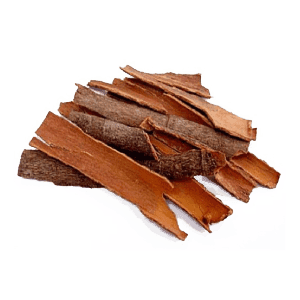
Cassia (Tej Patta / Dalchini Bark)
Product information
Price on Request
Description
Appearance: These are thick, rough pieces of bark, usually reddish-brown to dark brown. They are often sold as broken, flat pieces rather than the thin, tightly rolled quills characteristic of True Cinnamon (Ceylon cinnamon). The pieces are often woody and hard. Aroma & Flavor: It has a strong, pungent, and less subtle flavor than true cinnamon. The aroma is warm, sweet, and highly aromatic. Culinary Use: Widely used in cooking, especially in South Asian and Chinese cuisines, for savory dishes
Features & Specifications
The distinct aroma and flavor of Cassia primarily come from the high concentration of an organic compound called cinnamaldehyde.Key Chemical Component:Cinnamaldehyde: This aldehyde is the main volatile oil in cassia, often making up $\approx 85-95%$ of its essential oil. It is responsible for the characteristic smell and flavor.Other Components:Coumarin: This is an important distinction. Cassia contains significantly higher levels of Coumarin than true cinnamon. Coumarin can be toxic to the liver in very large doses, which is why true cinnamon is sometimes preferred for dishes requiring large quantities.Tannins, Mucilage, Resins: These are also present, contributing to the texture and overall composition of the bark.
Listed: December 2, 2025